Yumi Matsutoya (née Arai), known as Yuming, is a Japanese singer-songwriter who has sold more than 42 million records and is one of the most commercially successful artists in Japanese history. Her early albums, recorded with the Tin Pan Alley musicians, helped define the sophisticated “new music” from which city pop grew.[1]
Early career as Yumi Arai
Born in Hachiōji, Tokyo, in 1954, she debuted on 5 July 1972 with the single “Henji wa Iranai” on Toshiba EMI’s Liberty imprint.[1] Her first album, Hikō-ki Gumo (November 1973), was recorded with Caramel Mama — later Tin Pan Alley — whose members were Haruomi Hosono, Shigeru Suzuki, Tatsuo Hayashi and Masataka Matsutoya.[1][2] Critics credit these early records with developing the city pop template.[2] Three more albums followed under her maiden name, through 14-banme no Tsuki (1976).
As Yumi Matsutoya
She married arranger Masataka Matsutoya on 29 November 1976 and has recorded under her married name since Benisuzume (1978).[1] Through the 1980s her albums became fixtures at the top of the charts: she has had 21 Oricon No. 1 albums and is the only artist to score a No. 1 album in 18 consecutive years. Tengoku no Door (1990) was the first album certified 2× million by the RIAJ.[1]
Film
Two of her early songs, “Rouge no Dengon” and “Yasashisa ni Tsutsumareta nara”, were used as the theme songs of Hayao Miyazaki’s Kiki’s Delivery Service (1989).[1]
Discography
Main articles: Cobalt Hour, Misslim, Pearl Pierce
Studio albums
| Year | Title | Label |
|---|---|---|
| 1973 | Hikō-ki Gumo (as Yumi Arai) | Express |
| 1974 | Misslim (as Yumi Arai) | — |
| 1975 | Cobalt Hour (as Yumi Arai) | — |
| 1976 | 14-banme no Tsuki (as Yumi Arai) | — |
| 1978 | Benisuzume | — |
| 1978 | Ryūsenkei ’80 | — |
| 1979 | Olive | — |
| 1979 | Kanashii Hodo Otenki | — |
| 1980 | Toki no Nai Hotel | — |
| 1980 | Surf and Snow | — |
| 1981 | Mizu no Naka no Asia e | — |
| 1981 | Sakuban Oaishimashō | — |
| 1982 | Pearl Pierce | — |
| 1983 | Reincarnation | — |
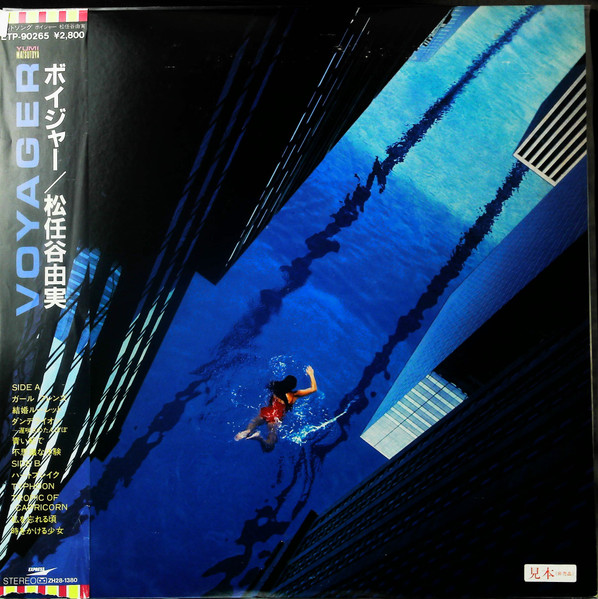
| 1983 | Voyager | — |
| 1984 | No Side | — |
| 1985 | Da-Di-Da | — |
| 1986 | Alarm à la Mode | — |
| 1987 | Diamond Dust ga Kienumani | — |
| 1988 | Delight Slight Light Kiss | — |
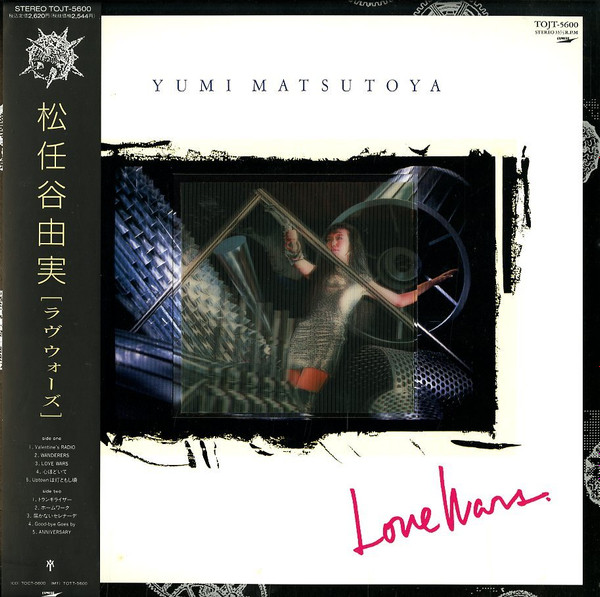
| 1989 | Love Wars | — |
| 1990 | Tengoku no Door (first RIAJ 2× million album) | — |
| 1991 | Dawn Purple | — |
| 1992 | Tears and Reasons | — |
| 1993 | U-miz | — |
| 1994 | The Dancing Sun | — |
| 1995 | Kathmandu | — |
| 1997 | Cowgirl Dreamin’ | — |
| 1997 | Suyua no Nami | — |
| 1999 | Frozen Roses | — |
| 2001 | Acacia | — |
| 2002 | Wings of Winter, Shades of Summer | — |
| 2004 | Viva! 6×7 | — |
| 2006 | A Girl in Summer | — |
| 2009 | Soshite Mouichido Yumemiru Darou | — |
| 2011 | Road Show | — |
| 2013 | Pop Classico | — |
| 2016 | Uchū Toshokan | — |
| 2020 | Shinkai no Machi | — |
| 2025 | Wormhole (credited to “Yumi AraI”) | — |
Notable singles
| Year | Title | Oricon peak |
|---|---|---|
| 1972 | “Henji wa Iranai” — debut | — |
References
- “Yumi Matsutoya”. Wikipedia. Retrieved 11 October 2026.
- “A Guide to City Pop, the Soundtrack for Japan’s Bubble-Era Generation”. Nippon.com. Retrieved 11 October 2026.
In the catalogue · 5



From the community
Nothing here yet — be the first to add a photo, a link or a pressing note.
Contribute to this page
Loading…