Shinji Harada is a Japanese singer-songwriter whose 1977 debut produced three simultaneous chart singles and whose first album, Feel Happy, entered the Oricon chart at No. 1.[1][2]
Debut
After passing For Life Records’ new-artist audition, Harada debuted on 25 October 1977 with “Teens’ Blues”, produced by Takuro Yoshida with lyrics by Takashi Matsumoto.[2] “Candy” followed in November and “Shadow Boxer” in December, and all three singles sat in the upper reaches of the Oricon chart at the same time.[1][2] His first album, Feel Happy (February 1978), debuted at No. 1 and held the top spot for four consecutive weeks.[2]
Later career
His fourth single, “Time Travel”, took him to the 29th NHK Kōhaku Uta Gassen at the end of 1978, and Spitz’s later cover of the song was used in the 2011 drama Boku to Star no 99 Nichi.[1][2] From the 1980s he increasingly worked as a songwriter, reportedly supplying more than 200 songs to other artists, including top-ten collaborations with Koji Kikkawa and Seiko Matsuda.[2] His albums of the period include Urban Game (1988) and Just Urban Night (1989).[1]
Discography
Studio albums
| Year | Title | Label |
|---|---|---|
| 1978 | Feel Happy (Oricon No. 1 for four weeks) | For Life |
Notable songs
- “Teens’ Blues” ↗1977
- “Time Travel” ↗1978
References
- “Shinji Harada”. Wikipedia. Retrieved 11 October 2026.
- “原田真二”. Wikipedia (Japanese). Retrieved 11 October 2026.
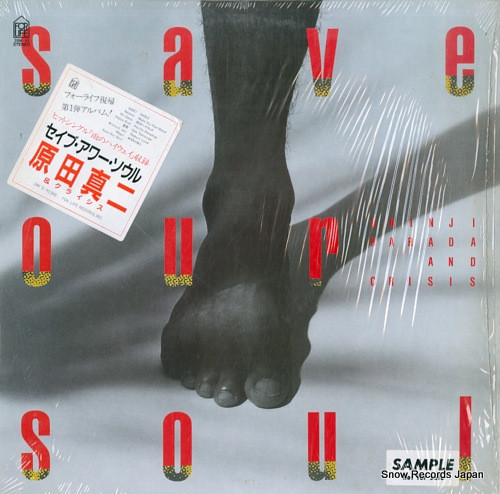
In the catalogue · 5




From the community
Nothing here yet — be the first to add a photo, a link or a pressing note.
Contribute to this page
Loading…